A malfunctioning dock leveler doesn’t just slow things down—it can shut down your entire loading operation. One failed unit can turn a busy dock into a costly bottleneck within minutes. Whether it’s a stuck pull-chain or a failing hydraulic system, knowing how to diagnose and handle dock leveler issues can save hours of downtime and thousands in repair costs.
In the world of logistics, uptime is everything. This guide walks you through the most common dock leveler problems, how to troubleshoot them, and when it is time to call in professional loading dock repair services.
Identifying Common Dock Leveler Problems
Before you can fix the issue, you have to diagnose it. Levelers are subject to extreme weight, fluctuating temperatures, and constant vibration. Over time, these factors lead to predictable failures.
The Leveler Won’t Raise
This is the most common complaint. If you have a mechanical leveler, the culprit is usually a broken or over-stretched main spring. For those using hydraulic dock leveler repair knowledge, the issue is often a low fluid level or a failed motor starter.
The Lip Won’t Extend
The “lip” is the bridge between your warehouse and the truck. If it fails to swing out, your forklift cannot enter the trailer. This is typically caused by:
- Bent Lip Hinge: Occurs when a truck backs into the leveler while the lip is extended.
- Debris in the Hinge: Small rocks, wood chips, or metal shavings can jam the mechanism.
- Failed Actuator: In hydraulic systems, the cylinder responsible for the lip might be bypassing fluid internally.
“Sticking” or Slow Movement
If your equipment moves like it’s stuck in molasses, you likely have a lubrication problem. Modern loading dock service standards require quarterly greasing of all pivot points to prevent metal-on-metal friction.
Troubleshooting Guide: Hydraulic vs. Mechanical
The repair path depends entirely on the type of technology you have in your pit. Here is a breakdown of how to approach each.
Hydraulic Dock Leveler Repair
Hydraulic units are generally more reliable but involve complex components like pumps, valves, and solenoids.
- Check the Fluid: Ensure the reservoir is full of high-quality hydraulic oil.
- Inspect the Fuses: Often, a “broken” leveler is just a blown fuse in the control box.
- Listen for Air: If the pump makes a high-pitched whining sound, air might be trapped in the lines.
Mechanical (Pull-Chain) Repair
These rely on a system of springs and hold-downs.
- Adjust the Hold-Down: If the leveler “pops up” while a forklift is on it, the hold-down mechanism is likely worn.
- Spring Tension: If the deck is too heavy to lift manually, the main springs need to be tightened (a task best left to professionals due to the high tension involved).
Comparison of Maintenance Needs
Not all levelers are created equal. Understanding the maintenance requirements can help you plan your budget for warehouse dock door repair and leveler upkeep.
| Feature | Mechanical Leveler | Hydraulic Leveler |
| Common Failure Point | Springs and Hold-downs | Seals and Solenoids |
| Repair Difficulty | Moderate (High Physical Effort) | High (Technical/Electrical) |
| Maintenance Frequency | Monthly | Quarterly |
| Average Repair Cost | Low to Moderate | Moderate to High |
| Primary Safety Risk | Snap-back from Springs | Fluid Leaks / Pressure Loss |
Step-by-Step: How to Safely Clean Your Dock Pit
Many loading dock leveler repair calls could be avoided with a simple broom. A dirty pit is a magnet for mechanical failure. Follow this safety-first process:
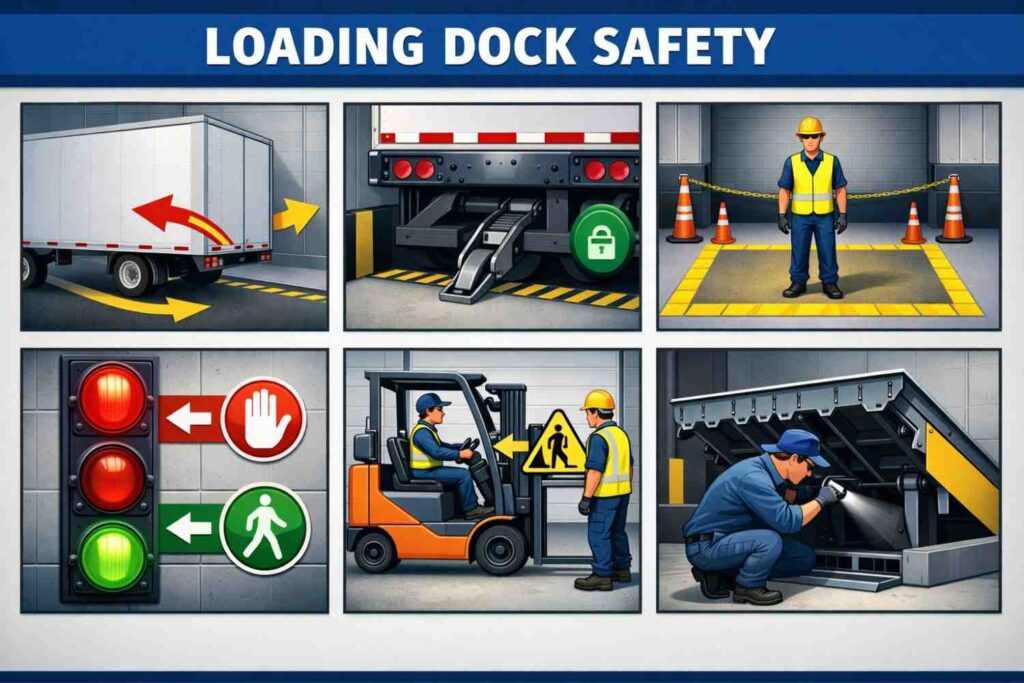
- Secure the Area: Use safety cones and barriers to prevent forklifts from approaching the bay.
- Engage the Maintenance Strut: Never enter a pit without the steel safety prop/strut securely in place to support the deck.
- Lockout/Tagout (LOTO): Disconnect the power source so no one can accidentally activate the leveler while you are underneath.
- Clear Debris: Use a shop vac or broom to remove pallet scraps, dirt, and “shrink wrap nests” that wrap around moving parts.
- Inspect for Leaks: While the pit is clean, look for any signs of fresh oil or structural cracks.
Why Professional Service Trumps DIY
While cleaning a pit is a great task for internal staff, actual commercial dock door repairand leveler mechanical work carry significant risks.
- Extreme Tension: Mechanical springs hold enough energy to be lethal if they snap during an amateur adjustment.
- Precision Alignment: If a deck is off-center by even half an inch, it can cause the leveler to “hang up” on the pit curb, leading to structural damage.
- Warranty Protection: Most manufacturers require that loading dock service be performed by certified technicians to keep the warranty valid.
If you notice “dishing” (the deck plate curving like a bowl) or if the leveler is making a grinding metal-on-metal sound, stop operations immediately and call for loading dock repair services.
Summary and Next Steps
A proactive approach to dock leveler repair is the difference between a smooth-running facility and a logistical nightmare. By catching dock leveler problems early—like slow lift times or minor leaks—you prevent the massive costs associated with emergency repairs and total replacements.
Your Action Plan:
- Weekly Visual Check: Have your operators report any unusual noises or “jumping” movements.
- Clear the Pits: Ensure your cleaning crew sweeps the dock pits at least once a month.
- Audit Your Door Systems: Often, leveler issues go hand-in-hand with door issues. Ensure your warehouse dock door repair needs are addressed simultaneously to save on service call fees.
- Schedule Professional Service: Contact us, a trusted provider for a comprehensive loading dock service to ensure your equipment is OSHA-compliant and ready for the peak season. Don’t wait for a complete failure to take action. Schedule a professional inspection today to identify hidden issues before they turn into costly downtime. A single service visit now can prevent thousands in emergency repairs later.
Safety Reminder: Always prioritize worker safety. If a leveler seems unstable, red-tag the bay and keep it out of service until a qualified technician can inspect it.
FAQ
A: The most common reasons are a blown fuse in the control panel, low hydraulic fluid, or a faulty motor starter. Check your power supply first before assuming the motor is dead.
A: For a standard warehouse, you should grease the hinge points and rollers every 90 days. In high-volume environments (24/7 operations), monthly lubrication is recommended to prevent premature wear.
A: Generally, no. Trying to bend a heavy steel lip back into place weakens the metal’s integrity. For safety reasons, a bent or warped lip should be replaced with a new factory-spec component.
A: Minor repairs like spring adjustments or sensor replacements typically cost between $300 and $800. Major repairs, such as motor replacement or structural welding, can range from $1,500 to $3,500.