The loading dock is the heartbeat of any warehouse, but it is also one of the most hazardous zones in the industrial sector. According to the 2026 safety data, nearly 25% of all warehouse accidents occur at the loading dock. For every reported injury, there are approximately 600 near-misses—silent warnings that a catastrophe is brewing.
Whether you are a facility manager or a dock worker, understanding loading dock service safety isn’t just about compliance; it’s about ensuring every team member goes home healthy. From preventing “trailer creep” to maintaining equipment through professional loading dock repair services, staying proactive is your best defence.
The Hidden Dangers: Common Loading Dock Hazards
Before we dive into the solutions, we must identify the “silent killers” on the dock. Most accidents aren’t caused by one big mistake but by a series of small, overlooked issues.
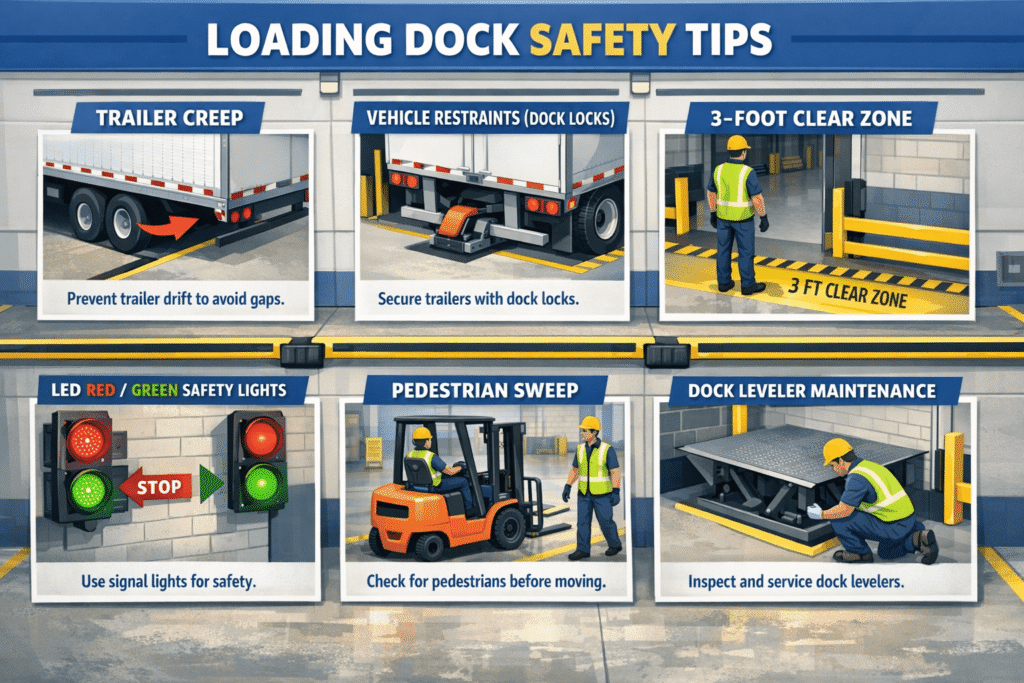
- Trailer Creep: This occurs when the forces of a forklift entering and exiting a trailer cause it to gradually move away from the dock, creating a dangerous gap.
- Early Departure: A truck driver pulls away while a forklift is still inside or transitioning between the dock and the trailer.
- Debris and Spills: Wet floors from rain or oil leaks from forklifts are leading causes of slips and falls.
- Poor Lighting: Inadequate visibility inside a dark trailer can lead to collisions or workers stepping off the edge of a dock plate.
Why Loading Dock Service Matters
You wouldn’t drive a car for five years without an oil change, yet many facilities neglect their levelers and restraints. Routine loading dock service identifies structural fatigue, hydraulic leaks, and worn-out bumpers before they fail during a live load.
Top 7 Loading Dock Safety Tips for 2026
To maintain a high standard of industrial safety protocols, follow these actionable strategies to fortify your facility.
1. Mandate the Use of Vehicle Restraints
Relying solely on wheel chocks is a legacy practice that often fails. Modern dock locks or mechanical vehicle restraints physically hook onto the trailer’s Rear Impact Guard (RIG). This prevents both trailer creep and premature pull-aways.
2. Implement a “Red/Green” Communication System
Clear communication between the driver and the dock attendant is vital. Install LED light systems:
- Green Light (Inside): Safe to enter the trailer.
- Red Light (Outside): Driver must not pull away.
- Red Light (Inside): Stay out; the trailer is not secured.
3. Maintain the “3-Foot Clear Zone”
Never stage pallets or equipment within three feet of the dock door. This provides an emergency “run-off” space for forklifts and ensures pedestrians aren’t pinched between a moving vehicle and a stationary load.
4. Use Edge-of-Dock Safety Barriers
When a dock door is open, but no trailer is present, it creates a deadly 4-foot drop. OSHA guidelines now strongly recommend (and in some cases require) physical barriers or highly visible safety gates that can withstand the impact of a slow-moving forklift.
5. Prioritize “Pedestrian Sweeps”
Before a trailer is cleared for departure, a designated “Pedestrian Sweep” should be conducted. This ensures no workers are in the “No-Walk” zones or near the trailer swing path.
6. Keep It Dry and Bright
Install heavy-duty LED dock lights with flexible arms to illuminate the entire length of the trailer. Additionally, ensure your dock seals are in good repair to prevent rain or snow from creating slick surfaces on the floor.
7. Schedule Professional Loading Dock Repair Services
If a dock leveler is vibrating excessively or making a “grinding” noise, it is a hazard. Professional loading dock repair services should be contacted immediately. A malfunctioning leveler can cause “dock shock,” leading to chronic back injuries for forklift operators.
Comparison: Manual vs. Automatic Safety Equipment
Choosing the right equipment can significantly impact your accident rates. Here is a quick breakdown of how common safety tools compare.
| Feature | Manual Wheel Chocks | Automatic Vehicle Restraints (Dock Locks) |
| Reliability | Low (can slip or be forgotten) | High (mechanically locks trailer) |
| Communication | Verbal/Hand signals only | Integrated LED light systems |
| Risk of Human Error | High | Low |
| Safety Level | Basic Compliance | Gold Standard (OSHA Preferred) |
| Initial Cost | Low | Moderate to High |
Step-by-Step: The “Safe-to-Load” Protocol
Consistency is the enemy of accidents. Every loading sequence should follow these five steps:
Loading: The forklift enters only after all safety checks are confirmed.
Arrival: The truck backs in; the driver sets the brake and turns off the engine.
Securing: The dock attendant engages the mechanical vehicle restraint (Dock Lock).
Verification: The attendant checks that the “Safe to Load” green light is on inside.
Inspection: A quick 10-second check for “trailer creep” or gaps between the dock and trailer.
Also Read: What are some safety features of loading docks?
Conversion & Next Steps
Safety is an investment that pays for itself in reduced insurance premiums and higher employee retention. If your equipment is outdated or showing signs of wear, don’t wait for an accident to happen.
Your Next Steps for a Safer Dock:
- Conduct a Gap Analysis: Walk your dock today. Are your yellow lines faded? Are chocks missing?
- Audit Your Tech: Consider upgrading to automatic restraints if you still rely on manual chocking.
- Book an Inspection: Contact a local provider for loading dock leveler service and repair services to perform a “safety health check” on your levelers and doors.
Final Note: A safe dock is a productive dock. By prioritizing these protocols, you aren’t just following the law—you’re protecting the people who keep your business moving.
FAQ
A: OSHA standard 29 CFR 1910.28 requires that any dock with a drop of 4 feet or more must be protected by a guardrail, safety gate, or equivalent barrier. Faded yellow lines are helpful but are not considered sufficient fall protection on their own.
A: For high-volume facilities, a quarterly loading dock service is recommended. At a minimum, an annual inspection by a certified technician is necessary to check hydraulic pressures, weld integrity, and spring tension on levelers.
A: Dock shock occurs when a forklift crosses an uneven transition between the dock and the trailer. It causes significant jarring to the driver’s spine. You can prevent it by using high-quality levelers and ensuring regular loading dock repair to keep transition plates flush.
A: Yes, but only if the height is flush and there is no gap. OSHA recommends using specialized dock plates or levelers designed for the unique height requirements of flatbeds to prevent the forklift from tipping.