Dock levelers play a crucial role in keeping your Atlanta warehouse or loading dock running smoothly. When they stop working properly, it can slow down operations, create safety risks, and even increase long-term repair expenses. That’s why regular maintenance and timely repair are essential.
In this guide, you’ll learn about common dock leveler issues, repair steps, cost factors, and expert tips to extend equipment life. We’ll also share how SEFMG can support you with reliable dock leveler repair services.
What Is a Dock Leveler & Why It Matters
A dock leveler bridges the gap between your facility’s loading dock and the truck bed—making loading and unloading safe, efficient, and faster.
A well-functioning leveler:
- Prevents accidents
- Handles heavy loads smoothly
- Keeps workflow continuous
- Protects forklifts and pallet jacks from impact damage
When a dock leveler malfunctions, productivity drops instantly—and repair becomes urgent.
Common Dock Leveler Problems in Atlanta
Here are the issues businesses most often face:
• Hydraulic Leaks
Hydraulic systems can develop leaks that cause slow movement, uneven lifting, or complete failure.
• Damaged Hinges or Lip Issues
When hinges bend or the lip doesn’t deploy correctly, workers are at risk and loading becomes difficult.
• Slow or Uneven Lifting
This usually indicates worn-out hydraulics or damaged mechanics.
• Worn-Out Springs or Cables
Mechanical levelers often fail because springs or cables lose tension over time.
• Electrical Malfunctions
Faulty wiring, damaged control boxes, or broken switches can halt operation.
• Structural Damage
Heavy loads or forklift impacts can bend the platform or frame.
Signs Your Dock Leveler Needs Immediate Repair
Act early if you notice:
- Unusual noises during lifting
- Visible oil under the dock
- The platform rising slowly or not staying level
- Lip failing to extend fully
- The unit shaking or dropping suddenly
- Frequent downtime or jamming
These signs indicate underlying mechanical or hydraulic issues that shouldn’t be ignored.
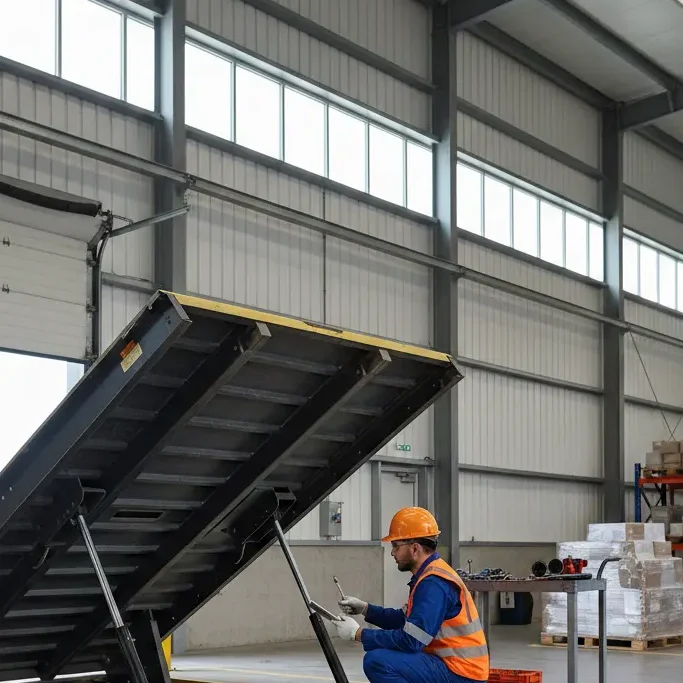
Professional Dock Leveler Repair Process: What to Expect
A trained technician will typically follow these steps:
1. Detailed Inspection & Diagnosis
Checking the pit, platform, lip, hydraulics, springs, and electrical parts.
2. Identifying the Root Cause
Understanding whether the issue is mechanical, structural, or hydraulic.
3. Part Replacement or Repair
Fixing broken welds, changing seals, repairing hydraulics, adjusting springs, etc.
4. Performance Testing
Ensuring smooth lifting, proper lip extension, and safe operation.
5. Final Safety Checks
Verifying load capacity, balance, and all safety components.
This ensures your dock leveler returns to reliable, safe performance.
Maintenance Tips to Extend the Life of Your Dock Leveler
A few simple practices can save hundreds in future repair costs:
• Lubricate Moving Parts
This reduces friction and prevents wear.
• Keep the Pit Clean
Debris buildup often causes mechanical blockages.
• Check Hydraulic Fluid Levels
Low fluid leads to slow lifting and overheating.
• Tighten Loose Bolts & Hinges
This keeps the platform stable and balanced.
• Schedule Seasonal Inspections
Hot Atlanta summers and cold winters can impact seals, springs, and wiring.
• Keep Forklift Traffic Controlled
Avoid aggressive impacts that damage the platform structure.
Dock Leveler Repair Cost in Atlanta: What Actually Affects Pricing?
Every repair situation is different, and costs naturally depend on:
• Type of Dock Leveler
Hydraulic, mechanical, or air-powered systems have different repair needs.
• Extent of the Damage
Minor adjustments and lubrication cost less than fixing major hydraulic or structural failures.
• Parts Required
Springs, seals, pumps, cables, and hinges vary in cost depending on brand and model.
• The Age of the Equipment
Older units may require more time, additional parts, or specialized adjustments.
• Custom Business Requirements
Some clients request upgrades, heavy-duty capacity enhancements, or added safety features—all of which influence cost naturally.
Because every dock is built differently, most professionals recommend an on-site inspection before giving an estimated service range. This ensures transparency and the right solution for your specific setup.
Repair vs. Replacement: How to Decide
You may only need a repair, but replacement becomes the better option when:
- The unit breaks down frequently
- Parts are no longer compatible or available
- The dock leveler is 15+ years old
- You need higher capacity for growing operations
- Safety concerns keep recurring
A professional evaluation will help you choose the most cost-effective path.
How SEFMG Helps With Dock Leveler Repair in Atlanta
SEFMG offers reliable, fast, and expert dock leveler repair services tailored for Atlanta businesses. Here’s why customers trust them:
• Skilled Technicians for All Dock Leveler Types
Hydraulic, mechanical, air-powered—SEFMG handles them all.
• Fast Response Times
Downtime hurts productivity, so SEFMG prioritizes quick scheduling.
• High-Quality Parts & Repairs
They use durable components to ensure long-lasting performance.
• Safety-Focused Approach
Every repair includes a complete safety check to protect your team.
• Preventive Maintenance Plans
Avoid unexpected failures and extend equipment lifespan.
• Honest Recommendations
No over-selling—SEFMG only suggests what’s actually needed for your dock’s condition.
With SEFMG, you get a team committed to keeping your loading dock equipment safe, efficient, and dependable.
Conclusion
Dock levelers are essential to your loading dock’s daily operations. With the right maintenance, timely repairs, and support from experts like SEFMG, you can keep your facility running smoothly and safely.
If your dock leveler is showing signs of wear or not performing the way it used to, scheduling a professional inspection is the best place to start.